Yamamoto, founded in 1961 and established as the global premium neoprene manufacturer.
Embrace Earth with Eco-Friendly Materials
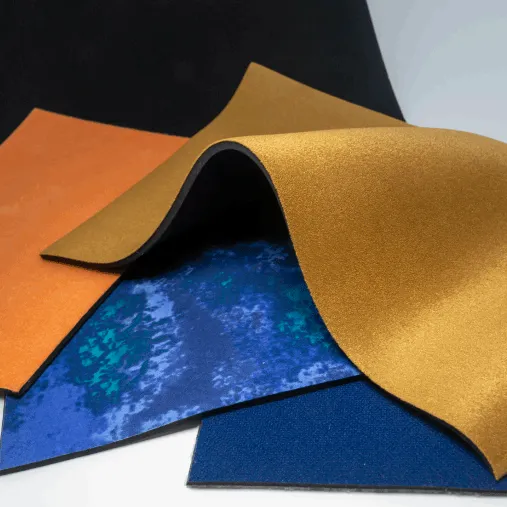
Chloroprene Rubber(CR), widely known as Neoprene. YAMAMOTO has been using 100% limestone-based CR for the following reasons.
Quality of Raw Material
Out of such purest limestone, YAMAMOTO only uses the highest-grade limestone, containing 99.7% of calcium carbonate. (The lower-grade limestone is used for cement.) Rubber can be made from Natural Rubber (NR) latex or petroleum oil. However, such raw materials are more likely to contain impurities. Therefore, its quality largely depends on production lot.
Sustainability
“Sustainability” is NOT to avoid using any resources but to use them smart.
It is said petroleum oil is going to be depleted in next 50 years. Limestone, on the other hand, can be utilized for a wetsuit material semi-permanently. As CR is excellent at performance such as weather resistance, CR neoprene lasts longer.
One of the most eco-friendly way is to use one product for a longer time.
Performance
While NR excels at mechanical strength such as tear strength, it shows poor performance in weather resistance and others. This is the reason why NR has never been adopted for wetsuits material despite its long history
Safety
Rubber products still can make up for the shortcomings by incorporating types of additives such as accelerator, anti-aging agent, anti-ozone agent, etc. However, it requires special attention to use such additives because some of them can cause allergies. NR needs huge amounts of additives to compensate for its serious downsides.
Unfortunately, many allergies have been reported in the market. In contrast, CR itself has good balance of performance. Therefore, CR doesn’ t need a lot of additives, and it can minimize the risk.